(*)Ogni fuoco diventa cenere
- (Project type)
- Personal project
- (Exhibition)
- Situ Festival Brolo, Sicily
- (Year)
- (Role)
- Concept and visual designer
- (Fields)
- Interaction Design, Research
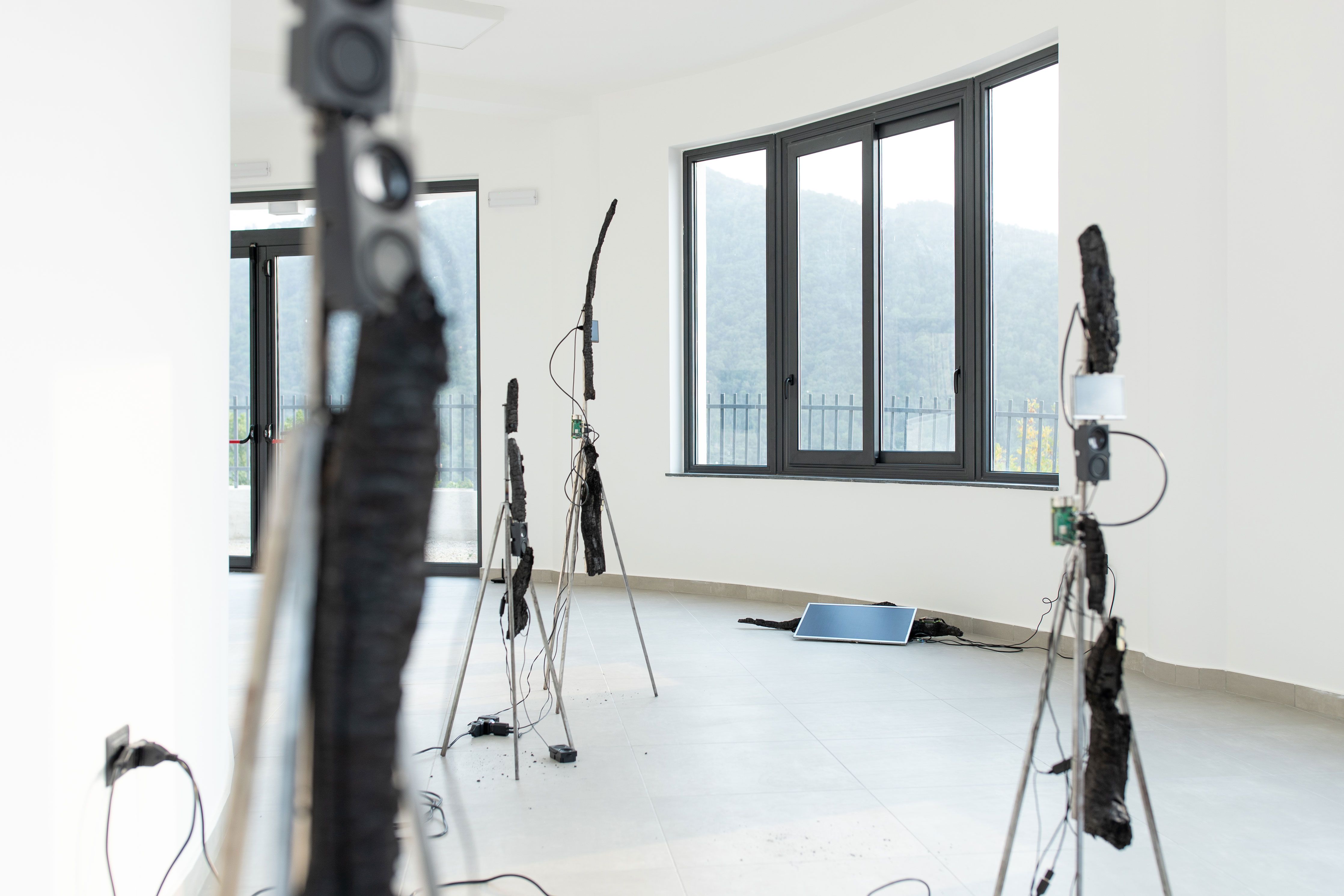
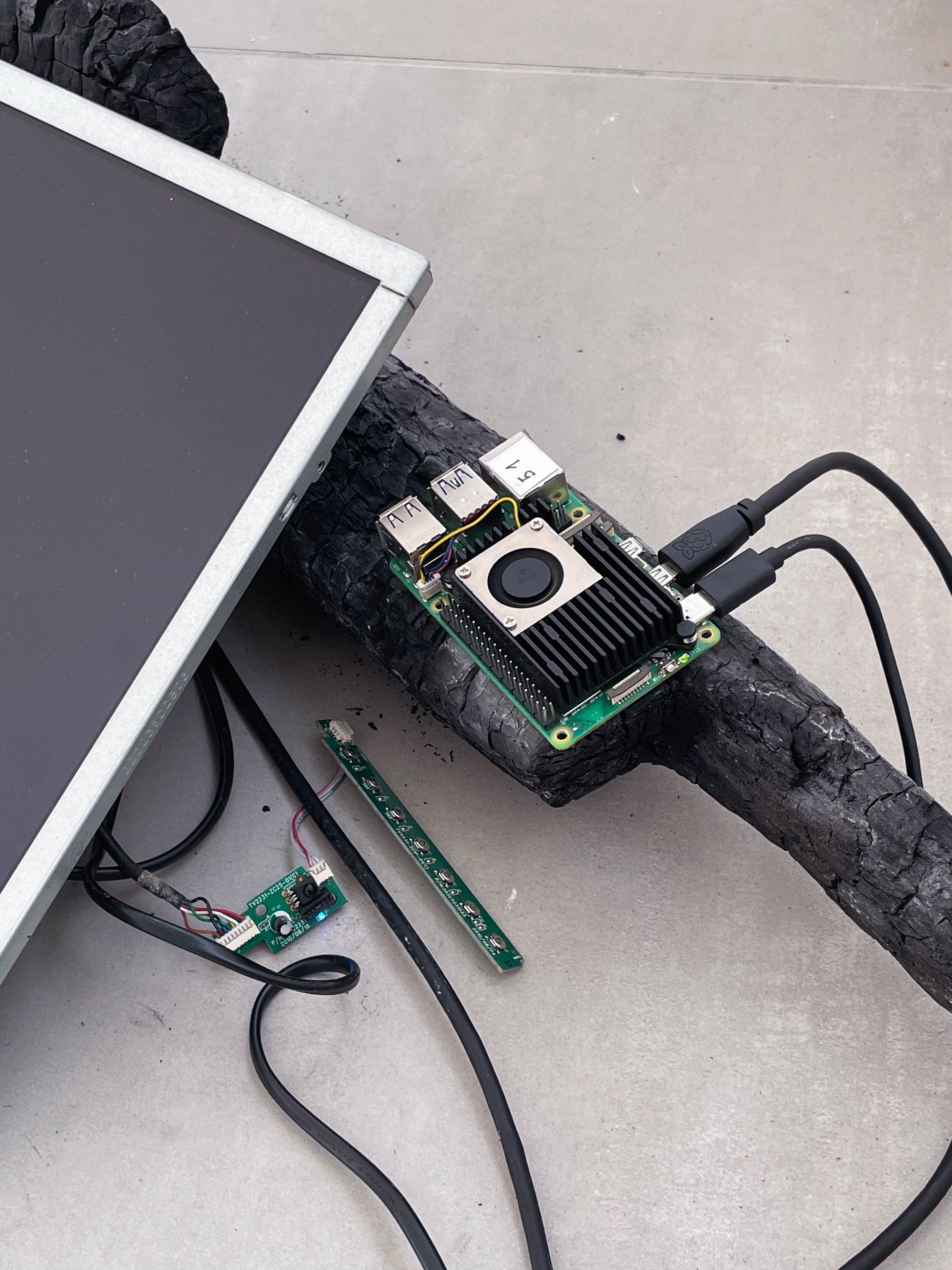
In Sicily, fire is an everyday and ambivalent presence. From summer wildfires to ritual bonfires, it protects, destroys and transforms, often within the same gesture. Ogni fuoco diventa cenere takes its title from the Sicilian saying Ogni focu forti diventa cinniri — every strong fire eventually becomes ash — and begins from what remains once the fire has passed. Presented at SITU Festival in Brolo, the installation brings thirty years of scientific data on fires across Sicily into dialogue with myths, rituals and oral memories surrounding fire. Data moves through the space as a chronological trace, while stories drawn from local folklore are rewritten through a process of collective writing, passing between different voices and interpretations. Together, these fragments form an unstable archive in which scientific records and collective memory coexist without producing a single account. As visitors move through the installation, objects, sounds and stories are activated in different combinations, continuously recomposing a narrative that never unfolds in exactly the same way.
Fire records are translated into an evolving visual landscape, where dates, coordinates and archival imagery overlap with traces of the installation itself. As the data progresses through time, information accumulates, stretches and fragments, shifting between legibility and abstraction.
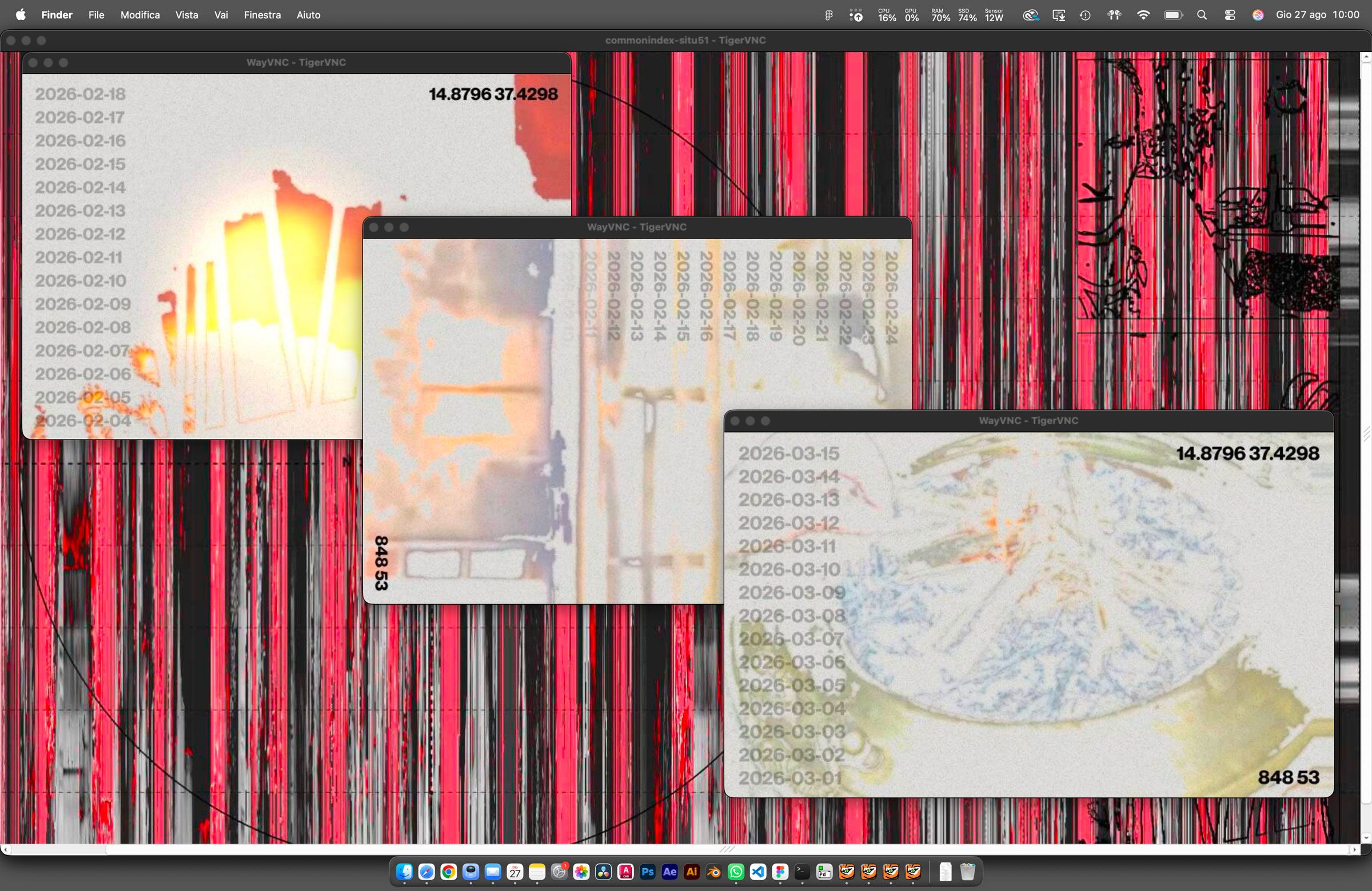
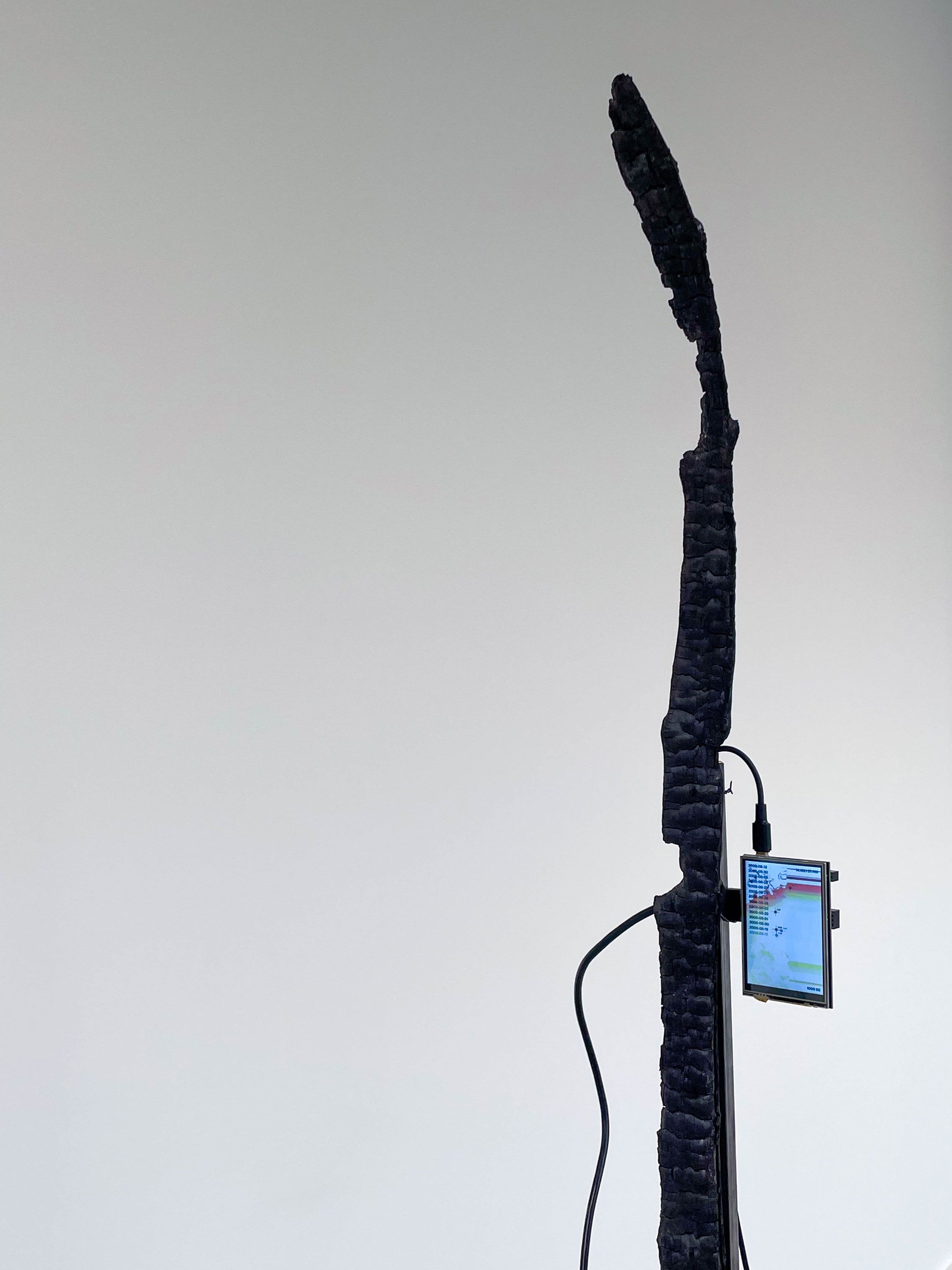
Dates, coordinates and images become part of an evolving visual landscape, continuously accumulating and fragmenting as the dataset moves through time. Scientific information remains partially legible, while gradually dissolving into texture, trace and abstraction.
The narrative is assembled through the presence of its audience. Moving through the installation, visitors activate individual objects, sounds and fragments of oral memory, creating temporary connections between stories and data. Each encounter produces a different configuration, turning the archive into a collective and continuously changing experience.
The rewritten stories return to the installation as recorded voices. Detached from the physical presence of fire, myths and memories circulate through sound, allowing different fragments of the archive to surface across the space and be encountered through listening.
Myths, legends and rituals surrounding fire became the starting material for a collective writing process. Stories passed between different hands, accumulating edits, interpretations and new fragments along the way. Rather than preserving folklore as something fixed, the process treats transmission itself as a form of transformation.
- ()